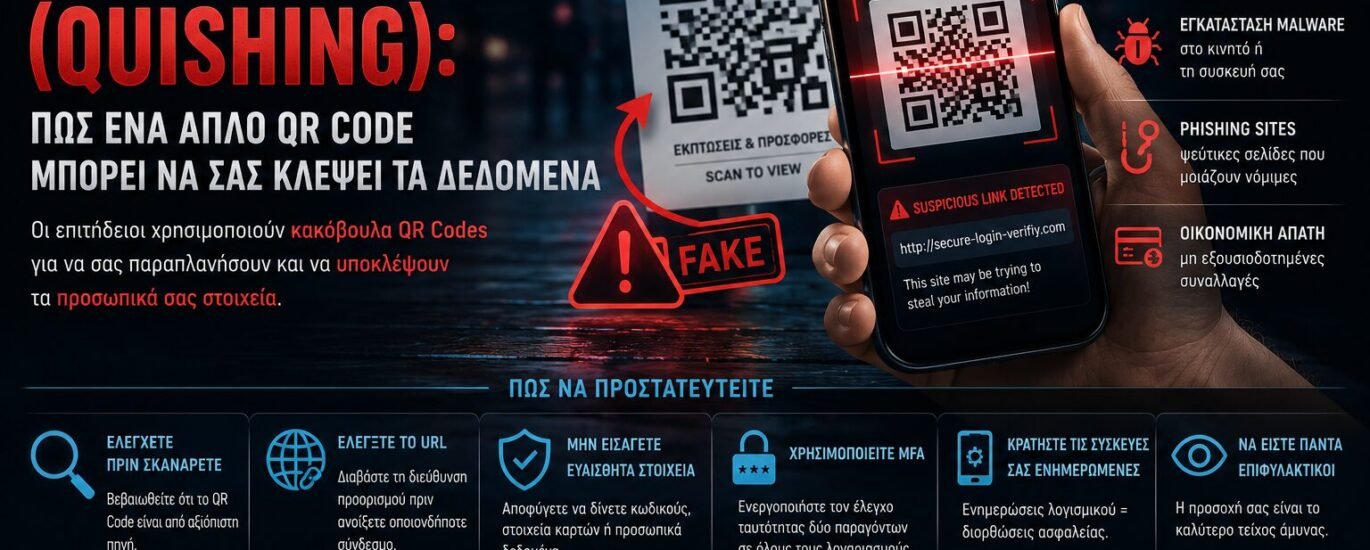
Τα QR Code Scamsalso known as Quishing (QR Phishing)are one of the fastest-growing forms of cyber fraud in recent years. From restaurants and cafés to parking areas, electric vehicle charging stations, and advertising posters, QR Codes have become part of our everyday lives. However, the convenience they provide has also transformed them into a new tool in the hands of cybercriminals.
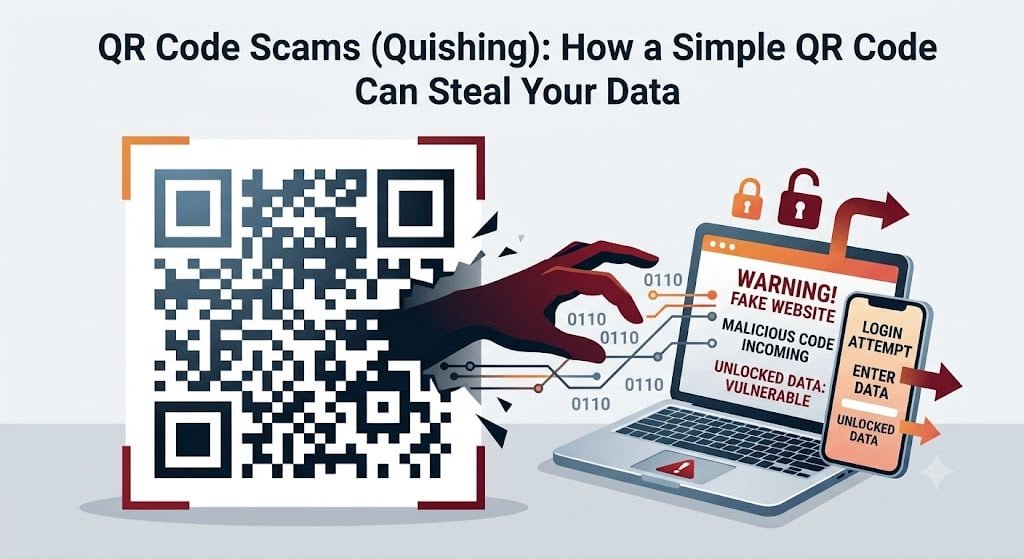
Unlike a traditional phishing email, where users can examine a link before opening it, a QR Code hides its actual destination. A single scan can redirect a user to a fake website, request login credentials, install malicious software, or steal personal information.
Understanding how QR Code Scams work has now become a fundamental element of modern cybersecurity awareness.
What is Quishing?
The term Quishing works, comes from the combination of the words QR Code and Phishing.It is a form of Social Engineering attack where attackers use malicious QR Codes to deceive their victims.
Instead of sending a suspicious link through email or SMS, attackers create a QR Code that redirects users to websites designed to appear completely legitimate. These websites may imitate banks, government services, payment platforms, delivery companies, or well-known login services.
Because users cannot immediately see the real URL destination before the redirection occurs, they are much easier to deceive.
Why Are QR Code Scams Increasing?
The COVID-19 pandemic accelerated the adoption of QR Codes in almost every aspect of daily life. Digital menus, electronic tickets, payments, customer loyalty applications, and public services now rely heavily on this technology.
Users have become accustomed to scanning QR Codes without a second thought. Cybercriminals exploit this familiarity, knowing that most people do not question the reliability of a QR Code in the same way they would question a suspicious link.
The increased level of trust towards this technology is one of the main reasons why Quishing attacks are experiencing significant growth worldwide.
Where Can You Encounter Malicious QR Codes?
Malicious QR Codes do not appear only online. They are often placed in physical locations where users do not expect a security risk.
There have been reported incidents involving fake QR Code stickers placed over real QR Codes on parking meters, posters, information signs, restaurant tables, electric vehicle charging stations, and vending machines. In many cases, attackers simply cover the original QR Code with their own malicious version.
At the same time, QR Codes are increasingly being used in phishing emails, SMS messages, and messaging applications, bypassing some traditional security filters that detect suspicious links.
What Can Happen After Scanning a Malicious QR Code?
Scanning a malicious QR Code can lead to several different attack scenarios.
A user may be redirected to a fake login page designed to steal credentials, a payment page attempting to capture credit card information, or a website that tries to install malicious applications.
In other cases, a QR Code may automatically create a new contact, initiate a message, connect the device to an untrusted wireless network, or trigger other actions that the user does not immediately notice.
These attacks mainly rely on speed, convenience, and user trust.
How to Protect Yourself from QR Code Scams
The best defense against Quishing is caution before scanning any QR Code.
Check whether the QR Code appears damaged, modified, or covered with a sticker. If your device displays the final URL destination before opening the website, take a few seconds to carefully examine it.
Avoid entering passwords or banking information immediately after being redirected through a QR Code. Instead, access important services by manually typing their official website address.
Enabling Multi-Factor Authentication (MFA) comes in. remains one of the most effective security measures, even in cases where someone manages to obtain your password.
Why Quishing Will Become an Even Bigger Concern
As digital services continue to expand and QR Codes become increasingly common, Quishing attacks are expected to become even more sophisticated.
The integration of artificial intelligence into cyberattacks allows criminals to create highly convincing websites, personalized messages, and targeted phishing campaigns, significantly increasing their chances of success.
User awareness and the adoption of basic cybersecurity practices remain the most effective defense against this evolving form of digital fraud.
Τα QR Code Scams are not a theoretical scenario but a real and continuously growing threat. A simple scan may be enough to expose personal information, compromise accounts, or even lead to financial fraud.
Understanding how Quishing works,carefully examining every QR Code, and using additional protection measures such as Multi-Factor Authenticationcan significantly reduce the risk.
As discussed in our articles about Stolen Data, The Dark Web and How to Check if Your Email Has Been Leakedmost cyberattacks exploit human trust and not only technical vulnerabilities. Awareness and critical thinking remain the strongest protection tools in the modern digital world.
Educational Disclaimer
This article is published exclusively for informational and educational purposes. Its goal is to enhance cybersecurity awareness, inform users, and help prevent modern digital threats.The information presented is not intended for malicious use or to promote illegal activities.
Find more Cyber Security articles or contact us to learn more about cybersecurity awareness, digital privacy, online safety, phishing protection, and modern cyber threats.