What to Watch Out for in Online Scams
Online scams are constantly evolving and target both individuals and organizations. From phishing attacks and fake e-shops to social engineering and malicious software, cybercriminals exploit human trust and lack of awareness.
Understanding the most common forms of digital fraud is the first and most important step toward protection.
1. Phishing (Fake Emails and SMS Messages)
Phishing is one of the most widespread forms of online fraud.
Users receive emails or SMS messages that appear to come from:
- banks
- courier companies
- public services
- online stores
The attackers’ goal is to:
- trick users into clicking malicious links
- collect personal information
- steal e-banking credentials or card details
Learn more:
CyberAlert – Phishing, Vishing & Smishing
2. Fake Websites and E-Shops
These are websites that imitate well-known brands or advertise unrealistically low prices in order to deceive users.
Potential risks include:
- payment without receiving the product
- stealing card details
- installation of malicious software
3. Social Engineering (Manipulation)
Social engineering attacks rely on psychological manipulation through phone calls, emails, or chat messages.
Common examples include:
- “I’m a Microsoft technician”
- “Your bank detected suspicious activity”
- “A relative of yours needs urgent help”
The Goal:
The goal is to steal money, personal information, or login credentials.
4. Malware
Malware is commonly installed through:
- fake applications
- email attachments
- suspicious websites
Possible consequences include:
- password theft
- ransomware attacks
- remote access to the device
5. Scams in Online Shopping and Marketplaces
Fraud on online marketplaces continues to increase.
Common techniques include:
- sending fake “payment receipt” links
- stealing card details
- fake advance payments from fraudulent sellers
6. Crypto Scams and Fake Investments
Scammers promise:
- high returns
- fast profits
- “guaranteed” investments
The Goal:
The goal is to convince victims to transfer money to fake platforms or cryptocurrency wallets.
7. Fake Offers on Social Media
Through advertisements on platforms such as Facebook, Instagram, and others, attackers promote:
- fake giveaways
- non-existent offers
- cloned versions of legitimate companies
Users are redirected to dangerous links or fraudulent payment forms.
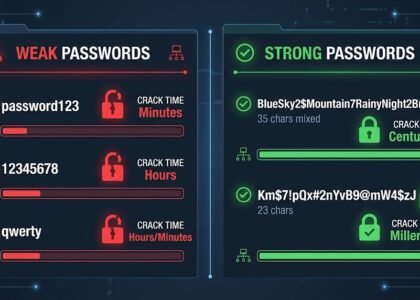
8. Credential Theft Due to Weak Passwords
Using weak or reused passwords dramatically increases the risk of account compromise.
Common mistakes include:
- using the same password across multiple services
- not enabling 2FA
- storing passwords in insecure applications
Learn more:
NSS – What is a Password Breach?
9. Public Wi-Fi Networks Without Protection
Public Wi-Fi networks in places such as:
- cafés
- airports
- hotels
may be exploited for:
- data interception
- connection monitoring
- unauthorized account access
10. Excessive Trust
The human factor remains the weakest link in cybersecurity.
Many incidents occur because users:
- respond too quickly
- fail to verify links
- believe that “it won’t happen to them”
Conclusion
Awareness and responsible digital behavior are the strongest lines of defense against modern online threats. Careful verification of communications, combined with basic cybersecurity practices, can significantly reduce the risk of fraud and personal data compromise.
Find more Cyber Security articles or contact us to learn how to better protect yourself, your business, and your digital environment from modern cyber threats.