In today’s digital world, organizations face far more than natural disasters or technical failures. Cyber threats, ransomware attacks, DDoS campaigns, malware, and insider threats can cause severe operational disruptions, data loss, and significant financial or business impact.
Within this environment, Business Continuity (BC), Cyber Resilience, and Disaster Recovery (DR) are no longer simply security strategies. They have become essential pillars of sustainability and operational continuity for every modern organization.
The true value of these frameworks becomes evident during a crisis — when an organization must continue operating, recover quickly, and maintain the trust of customers and business partners.
Business Continuity – Maintaining Operational Functionality
Business Continuity focuses on ensuring that critical business operations remain functional even after major security incidents or technical disruptions.
In practical terms, this includes:
- maintaining critical services after a cyberattack or outage
- implementing alternative workflows for secure operational continuity
- communication plans for employees, customers, and partners
- preserving operational stability and organizational reliability
Business Continuity extends beyond data or infrastructure recovery. It focuses on maintaining overall business operations even under crisis conditions and operational pressure.
Cyber Resilience – The Ability to Withstand Threats
Cyber Resilience refers to an organization’s ability to withstand, adapt to, and recover from cyberattacks or technical disruptions.
It represents a holistic approach that combines:
- technology
- processes
- security policies
- and the human factor
Key Characteristics of Cyber Resilience
Rapid Adaptation
The ability to respond quickly to emerging or evolving threats.
Damage Minimization
The organization remains operational even under adverse conditions.
Maintaining Trust
Customers and business partners continue to trust the organization because it can effectively manage crises and security incidents.
Cyber resilience is not only about preventing attacks, but also about preserving operational integrity and data consistency during and after an incident.
Disaster Recovery – Fast and Secure Restoration
Disaster Recovery (DR) focuses on the technical and organizational restoration of systems, infrastructure, and data after critical incidents.
In cybersecurity, DR serves as a critical mechanism for responding to attacks and operational disruptions.
Core Objectives of Disaster Recovery
Data Recovery
Secure restoration of backups and recovery systems after an attack or disaster.
Integrity Verification
Ensuring that systems and data have not been compromised or altered.
Downtime Minimization
Rapid restoration of services in order to reduce financial and operational losses.
An effective Disaster Recovery Plan typically includes:
- regular backups
- off-site or cloud storage
- recovery procedures
- restoration testing
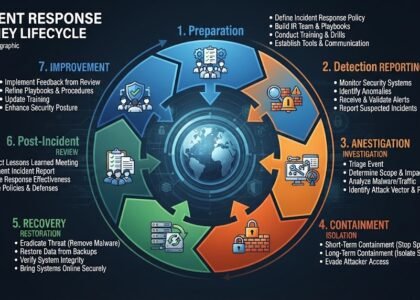
- incident response processes
Having backups without regularly testing restoration procedures does not constitute a true disaster recovery strategy.
Why BC, Resilience & DR Are Critical
Modern cyberattacks no longer focus solely on data theft. In many cases, they aim to:
- disrupt operations
- create financial pressure
- damage organizational reputation
- and generate operational chaos
Organizations without business continuity and recovery strategies often struggle to:
- restore services
- protect data
- manage crises
- customer
The difference between an organization that recovers quickly and one that becomes paralyzed after a cyberattack is largely determined by preparation.
Integration with Broader Cybersecurity Strategies
Business Continuity and Disaster Recovery do not operate in isolation.
They are closely connected to:
- Threat Detection
- Data Loss Prevention (DLP)
- Identity & Access Management (IAM)
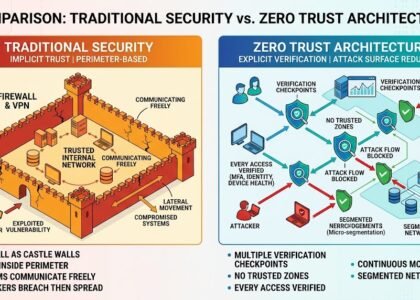
- Zero Trust Architecture
- Incident Response
- Monitoring & Logging
The more comprehensive the overall security framework is, the greater the organization’s resilience against attacks and crises.
Conclusion
Business Continuity, Cyber Resilience, and Disaster Recovery are fundamental pillars of modern cybersecurity.
They are not limited to the technical protection of systems and data, but relate directly to an organization’s ability to continue operating during crisis situations.
In an environment where cyber threats constantly evolve, true resilience depends on:
- preparation
- strategic planning
- effective procedures
- continuous training
- and ongoing testing of recovery mechanisms
Cybersecurity should not be measured solely by an organization’s ability to prevent attacks, but also by how effectively and rapidly it can recover when an incident occurs.