Why the Human Factor Remains the Weakest Link in Cybersecurity
Παρά τη σημαντική πρόοδο στα τεχνικά μέτρα ασφάλειας — όπως firewalls, anti-malware λύσεις, encryption, network monitoring και advanced security tools — ο πιο αδύναμος κρίκος στην ασφάλεια πολλών οργανισμών παραμένει ο ίδιος ο άνθρωπος. (The Human Factor in Cyber Security)
In practice, a large percentage of data breaches are not caused by sophisticated hacking techniques, but by human mistakes, negligence, or the exploitation of human behavior. These incidents may originate from both external attackers and internal actors.
Cybersecurity is no longer solely a technical challenge. It is also a human challenge.
Why the Human Factor Is So Critical
According to recent studies and reports:
- approximately 95% of data breaches are linked to human error or poor credential management
- 68% of breaches in 2024 were attributed to human error, social engineering, or inadequate access management
- 74% of social engineering attacks begin via email according to European Union Agency for Cybersecurity
- 1 in 3 businesses within the European Union experienced a phishing attack during the past 12 months
The involvement of the human factor is not limited to external threats. Employees and business partners themselves often become — intentionally or unintentionally — the most vulnerable points within an organization.
These findings clearly demonstrate that technical controls alone are not sufficient. Effective security also requires human resilience and awareness.
Categories of Human-Related Threats and Weaknesses
To better understand how the human factor impacts cybersecurity, the primary risks can be divided into three major categories.
1. Human Error & Negligence
Human mistakes and negligence remain among the most common causes of security incidents.
Examples include:
- sending sensitive information to the wrong recipient
- incorrect permission configurations
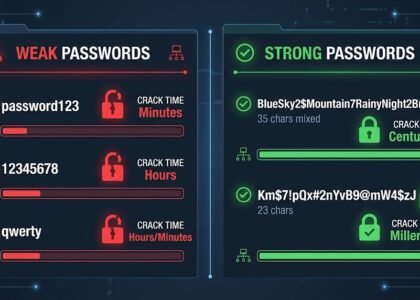
- weak passwords
- failure to use Multi-Factor Authentication (MFA)
- poor credential and account management
Many incidents occur because of:
- lack of awareness
- insufficient training
- time pressure
- rushed decision-making
2. Insider Threats
Insider threats involve employees or collaborators abusing their access privileges.
Motivations may include:
- financial gain
- personal motives
- revenge
- or unintentional mistakes
Common incidents include:
- data leakage
- abuse of privileged access
- unauthorized file copying
- violations of security policies
In many environments, inadequate privilege management significantly increases the risk of critical system compromise.
3. Social Engineering & Human Manipulation
Social engineering attacks rely primarily on manipulating human behavior rather than exploiting technical vulnerabilities.
Common attack types include:
- phishing
- spear phishing
- vishing
- smishing
- impersonation
- pretexting
- tailgating
These attacks exploit:
- trust
- fear
- urgency
- and lack of verification procedures
In many cases, even highly secured environments can be compromised through a single deceived user.
What Leads to Human Errors
Several factors increase the likelihood of human mistakes and security weaknesses.
The most significant include:
- lack of cybersecurity awareness
- underestimating cyber risks
- organizational cultures that do not prioritize security
- excessive trust in technology
- burnout and time pressure
- remote work and multi-device usage
- increasingly complex cloud environments
As digital infrastructures become more complex, the probability of human error also increases.
Why Technical Controls Alone Are Not Enough
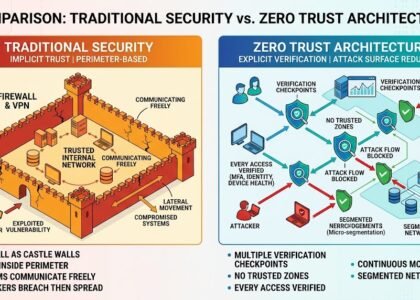
Firewalls, antivirus solutions, IDS/IPS systems, and encryption technologies can reduce technical vulnerabilities, but they cannot fully prevent:
- human mistakes
- social engineering
- misuse of privileges
- insider threats
In modern environments involving:
- multiple users
- remote access
- cloud infrastructures
- third-party collaborations
human security awareness becomes a critical component of the overall defense strategy.
Greek Cybersecurity Incidents Highlighting the Human Factor
Hellenic Post (ELTA) – Ransomware Attack (2022)
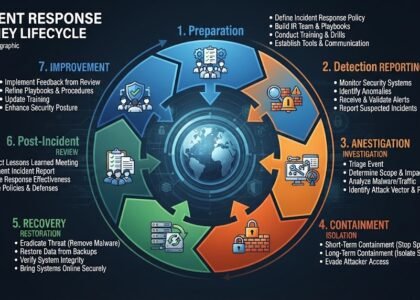
The ransomware attack against ELTA demonstrated the importance of timely system updates and effective incident response management.
Ministry of National Economy and Finance – Phishing Campaigns
Targeted phishing campaigns against accountants and tax professionals exploited users’ trust in platforms such as TAXISnet.
Greek Research and Technology Network – Ransomware Incident
The incident highlighted that even technologically mature organizations remain vulnerable when weaknesses exist in credential management and operational procedures.
Core Defensive Practices
Reducing risks associated with the human factor requires a combination of technical and organizational measures.
Key practices include:
- regular security awareness training
- phishing simulations
- MFA implementation
- strong password policies
- least privilege access
- regular privilege reviews
- monitoring and behavioral analytics
- verification procedures for sensitive requests
- continuous auditing and employee retraining
Cybersecurity is not solely the responsibility of the IT department. It is the responsibility of the entire organization.
Conclusion
The human factor remains both the most important line of defense and the most vulnerable point in cybersecurity.
An organization may deploy advanced technical security controls and still remain vulnerable due to:
- human error
- social engineering
- insider threats
- insufficient awareness
Effective cybersecurity requires a combination of:
- and technical safeguards
- security policies
- education
- security procedures
- and, most importantly, a strong security culture
True resilience is not built solely through technology, but through informed, trained, and prepared people.